
Introduction
The food and beverage industry is changing faster than ever, and a restaurant’s online presence now carries as much weight as the dining room itself. Modern guests no longer settle for a phone number on a search listing — they want a taste of the experience before they ever walk through the door. Turning casual browsers into regular customers calls for a platform built with real strategy, and this is exactly where partnering with a skilled web design company in UK becomes valuable, since it brings together contemporary visuals with a smooth, functional backend.Understanding what makes strong restaurant website design is the first step toward building a platform that truly works.
Crafting a website that truly works for a restaurant isn’t just about looking good — it takes a thoughtful mix of strong visual storytelling, quick load times, and features designed to turn visitors into paying guests.
1. Knowing Your Audience and Shaping a Visual Identity
No two restaurants share the same character, and the website needs to capture that distinct personality. The colour choices, fonts, tone of voice, and photography style for an upscale dinner spot will look nothing like what works for a casual neighbourhood diner.
An experienced web design company in UK approaches this by studying both the brand and how customers think and behave online. A high-end steakhouse, for instance, might lean into moody, dark tones paired with traditional serif typefaces, whereas a modern plant-based café would suit airy layouts and clean sans-serif fonts instead. Within seconds, the site should make it obvious who the restaurant is built for and what kind of evening it’s offering.
2. The Online Menu: Built for Customers and Search Engines Alike
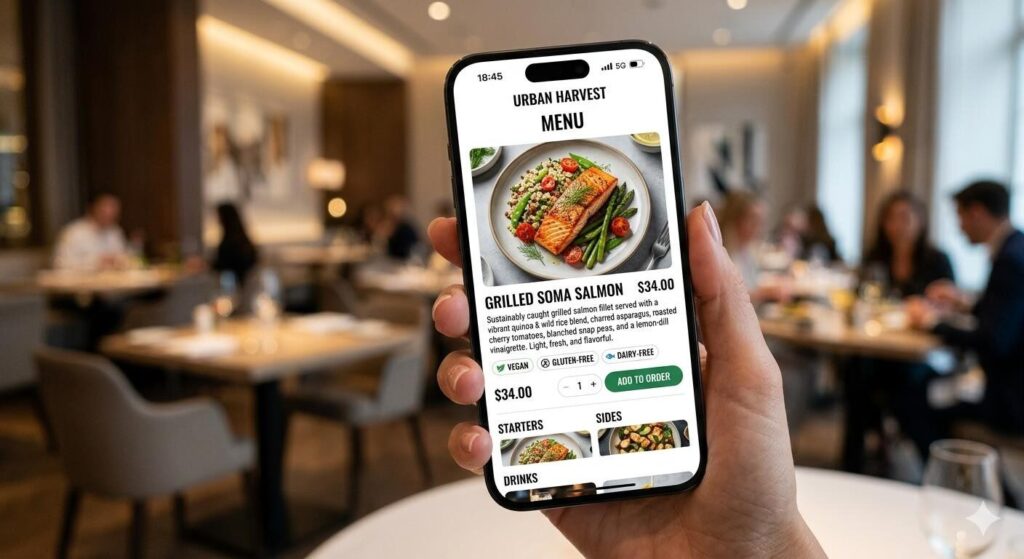
Out of every page on a restaurant’s site, the menu carries the most weight. Many businesses still make the error of uploading it as a flat PDF or tucking it inside an embedded frame, and this choice quietly damages their visibility in search results. Search engines have a hard time reading text locked inside images or PDF files, which means the business forfeits local search ranking it could otherwise be earning.
What a 2026-ready digital menu needs to include:
- Flexible, Responsive Formatting: Text-based layouts that reshape themselves cleanly for any screen size.
- Clear Descriptions and Pricing: Well-written item details, transparent prices, and filters for dietary needs such as gluten-free or vegan options.
- Built-in Space for Quality Visuals: Dedicated spots for sharp, properly optimized photos of each dish.
3. Fast-Loading Visuals and Engaging Video Content
People decide with their eyes before they decide with their appetite, which is why strong photography and brief video clips aren’t optional extras anymore. Keeping pages quick to load in 2026 means every image and video file should be saved in newer formats like .webp or .avif, which helps avoid the sluggish loading that pushes visitors away.
Booking a proper photo session to showcase signature dishes and the feel of the dining room goes a long way toward building trust instantly. On top of that, adding a short looping video in the background or linking out to a polished YouTube clip of the kitchen or dining space tends to keep visitors on the page noticeably longer.
4. Sharing the Brand’s Story Honestly
With so many places to eat competing for attention, diners are drawn to brands they feel some connection with. Setting aside a section titled something like “Our Story” or “Our Philosophy” gives a restaurant room to tell that story properly.
Talking about how the restaurant came to be, putting a face to the head chef, and explaining where the ingredients come from all help define what makes the place worth visiting. This kind of openness turns the website from just another menu listing into a destination guests feel they know before they arrive.
5. Earning Trust Through Genuine, Independent Reviews
Showing off customer feedback is a reliable way to build credibility, but typing out reviews by hand often comes across as staged to today’s web visitors.
A stronger approach is to embed live review widgets that draw feedback directly from established, independent platforms such as Google Reviews or TripAdvisor. Because the source is visibly outside the restaurant’s control, potential diners are more inclined to trust that the praise is genuine.
6. Making Bookings and Getting in Touch Effortless
Once someone is sold on the food and the atmosphere, booking a table shouldn’t involve more than a couple of taps. Every step in that journey needs to point clearly toward an action.
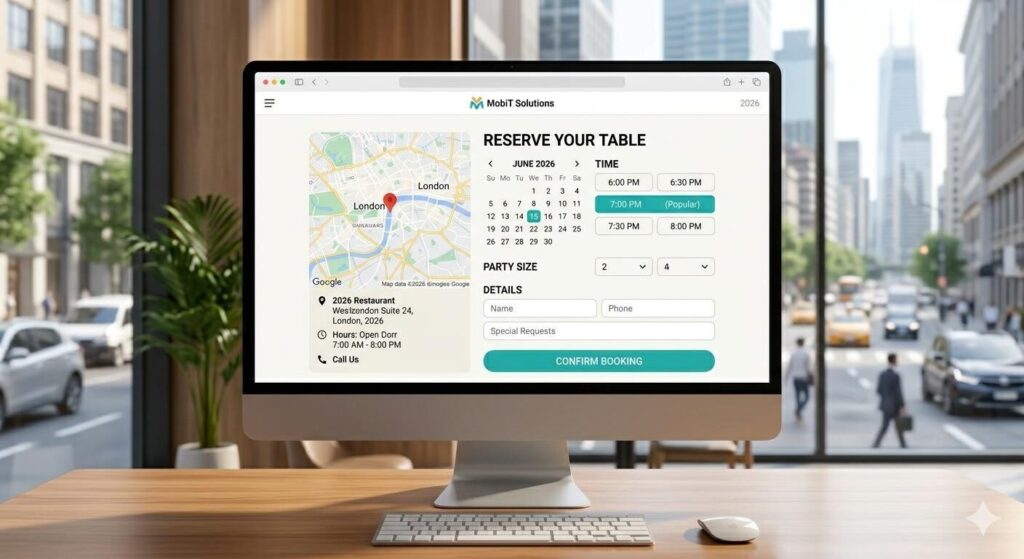
A well-built site offers a live booking system where guests can check open time slots, pick a date, and confirm their reservation instantly. Beyond the automated tool, it also helps to offer a few simple ways to reach the restaurant directly — a phone number, a WhatsApp button, and a basic contact form — so every guest can reach out however suits them best.
7. Keeping Key Local Details Easy to Find
A large share of local search traffic comes from people on their phones who just need a quick, practical answer. That means the basics have to sit somewhere obvious, like the site’s header or footer.
Details that should never be hard to spot:
- Hours of Operation: A straightforward listing of weekly hours, plus any changes for holidays.
- Address and Directions: An interactive map alongside the exact address.
- Pickup and Delivery Information: Direct links explaining how to arrange curb-side pickup or takeaway orders.
Taking the Strategy Further
That’s why many restaurants today choose to work alongside a capable web design company in UK and a trusted
web development company in UK to build growth strategies backed by real data. When solid design work is paired with reliable digital marketing services in UK, the result is a website that doesn’t just look impressive — it actually ranks well, brings in organic visitors, and keeps tables filled.
Frequently Asked Questions (FAQs)
Why is a PDF menu a bad idea for a restaurant website?
Search engines aren’t able to crawl PDF files efficiently, which holds back how visible the restaurant is in local search. PDFs also tend to be awkward on mobile screens, leaving users to zoom and scroll just to read a few dishes. A proper text-based menu built directly into the page works far better for both visitors and search rankings.
Why do WebP images work better than JPEG or PNG on a restaurant site?
WebP compresses images far more efficiently than older formats like JPEG or PNG, shrinking file sizes without sacrificing visual sharpness. For a site that relies heavily on food photography, that translates into faster page loads, fewer visitors leaving early, and better engagement from mobile users.
What makes a live reservation widget better than a basic email form?
A live reservation widget connects directly to the restaurant’s seating system in real time, so there’s no waiting on email replies. It also helps avoid accidental double bookings and gives the customer instant confirmation, which tends to lead to more completed reservations overall.
How much does it cost to build a restaurant website in the UK?
The cost varies depending on features required. A basic site starts from a few hundred pounds, while a fully custom platform with online booking and SEO optimisation costs more. Working with a professional web design company in UK ensures a solution built to your specific budget.
How long does it take to build a restaurant website?
A straightforward restaurant website takes two to four weeks. More advanced builds with live reservation systems and full SEO setup may take longer. A reliable web development company in UK will provide a clear project timeline from the start.